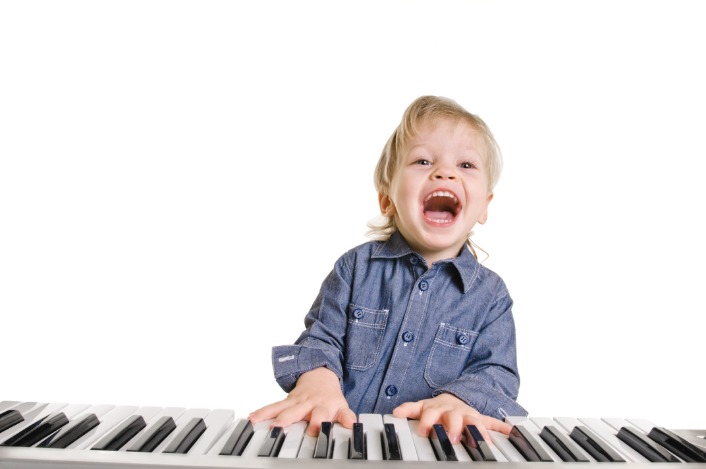
For many families and educators, the piano becomes more than an instrument; it’s a structured, predictable space where attention, emotion, and movement can harmonize. The keyboard’s linear layout, clear cause-and-effect, and consistent tuning create a stable sensory world that supports learning. This is why piano lessons for autism often feel intuitive. Keys are logically arranged, patterns are visible, and repetition—so central to mastery—feels purposeful rather than tedious. Autistic learners who think in patterns, prefer routine, or thrive on visual-spatial structure often find the piano unusually welcoming.
Neurologically, the piano integrates bilateral coordination, timing, and auditory processing. Each press of a key offers tactile feedback; each sound provides immediate auditory confirmation. These micro-cycles of action and response help build attention, impulse control, and sequencing, all within a motivating context. The instrument also supports sensory regulation: steady rhythms can calm, predictable dynamics can reduce anxiety, and controlled finger movements can channel energy constructively. For some, the piano becomes a soothing stimming alternative, offering a satisfying loop of movement and sound.
Emotional and communicative benefits emerge naturally. Music can express what words sometimes cannot, supporting both speaking and non-speaking learners. Duets and call-and-response patterns help practice turn-taking and shared attention, while improvisation offers choice-making and self-advocacy without the pressure of verbal conversation. As confidence grows, so do generalizable skills: task initiation, persistence, flexible thinking, and problem-solving. Families often report that piano lessons for autistic child experiences ripple into schoolwork and daily routines, enhancing organization and resilience.
Accessibility is another key factor. Pianos and keyboards are ubiquitous, and weighted or semi-weighted keys offer a range of tactile experiences. Digital keyboards enable volume control, headphone practice, and instrument sounds that invite exploration without sensory overload. With thoughtful adaptations—visual cues, simplified notation, or customized seating—piano learning accommodates diverse profiles, making mastery feel possible and progress rewarding.
Designing Individualized Instruction That Respects Neurodiversity
Effective instruction begins with accepting each learner’s sensory profile, communication style, and interests. A neurodiversity-affirming approach frames differences as strengths to build on rather than obstacles to eliminate. Before a single note is played, the teacher collaborates with the family to identify sensory preferences: preferred volume levels, tolerance for metronome clicks, lighting needs, and movement breaks. Lessons might open with a predictable warm-up routine—five-finger patterns, a favorite scale, or a rhythmic chant—because predictability reduces cognitive load and anchors attention.
Universal Design for Learning principles make piano content flexible. Some learners flourish with color-coded notes, visual schedules, and step-by-step task analysis; others prefer standard notation introduced gradually through landmark notes and pattern recognition. Improvisation and ear-first learning can precede or complement reading, especially when motor planning or visual processing adds complexity. Choice boards for repertoire empower students to opt among classical themes, film music, game soundtracks, or sensory-friendly soundscapes. When interests lead—dinosaurs, space, trains—motivation soars, and practice transforms into play.
Scaffolding is vital. Break challenges into micro-goals: a hand position, a two-note pattern, a single rhythmic cell. Use errorless learning when frustration spikes; guide hands physically only with consent and clear communication, or model visually and aurally instead. AAC users might indicate preferences with a device or gesture, while non-speaking students can track progress with checklists or token systems that prioritize autonomy. Because executive functioning varies, short, frequent practices—two or three minutes several times a day—often beat a single long session. Visual timers, practice cards, and recorded demos help build independence without pressure.
Technology can amplify success. Slow-down apps, MIDI keyboards that display illuminated keys, and loopers for call-and-response games support engagement. Headphones or bone-conduction options minimize auditory overwhelm. For those sensitive to unexpected sounds, start with quiet dynamics and gradually expand. Teachers committed to piano teacher for autism best practices also plan for co-regulation: breathing together, tapping steady pulses, or taking movement breaks integrate body and mind. Above all, progress measures what matters to the learner—joy, self-expression, and workable routines—alongside technical milestones like rhythm accuracy, note fluency, and hand independence.
Choosing the Right Teacher and Real-World Success Stories
Finding a fit matters as much as curriculum. Look for a professional who asks thoughtful intake questions about sensory needs, communication methods, and motivators. Ask how they structure the first three lessons, how they adapt notation, and how they support regulation if anxiety rises. Backgrounds vary—music therapy, special education, trauma-informed teaching—but the unifying trait is responsiveness. Trial lessons reveal how a teacher co-creates goals, honors stimming, and balances direction with choice. A teacher willing to modify lighting, reduce visual clutter, or switch to ear-based learning on the spot signals a learner-first approach.
Families often seek educators who blend patience with high expectations. A good match is collaborative, welcomes caregiver insights, and offers clear at-home strategies that respect energy and schedule constraints. Transparent progress tracking—short videos, practice notes, or simple data like “time on task” and “number of independent starts”—helps everyone celebrate growth. When travel or transitions are hard, online sessions with sensory-friendly settings can work beautifully; camera angles that show the keyboard, onscreen highlighting, and chat-based prompts support clarity without overstimulation.
Consider real-world snapshots. A nine-year-old non-speaking student began with two-note pentatonic improvisations. Within months, the learner anticipated phrase shapes and initiated simple call-and-response games, increasing joint attention from 30 seconds to three minutes. A fourteen-year-old with performance anxiety found security in predictable warm-ups and low-contrast sheet music; steady metronome work started at whisper-level volume, gradually normalizing stage dynamics. A six-year-old who craved deep pressure practiced on a weighted keyboard, pairing strong downbeats with proprioceptive input; rhythmic stability improved and meltdowns around transitions decreased.
Where specialized guidance is important, a resource like piano teacher for autistic child can streamline the search, connecting families with professionals who understand sensory profiles, AAC integration, and adaptive repertoire. Look for language that centers strengths: pattern thinking, musical memory, perfect-pitch tendencies, and focused interests are assets to cultivate. The best teachers create a culture of consent—asking before offering hand-over-hand support, celebrating self-advocacy, and validating breaks as legitimate learning tools. Over time, families notice more than musical gains: improved planning, calmer evenings, and a student who self-initiates practice because music now lives where it belongs—within the learner’s control and curiosity.
Success also evolves beyond standard recitals. Some students thrive in low-stakes share-outs: a video for grandparents, a duet with a sibling, or a studio circle where applause is replaced by quiet thumbs-up. Others love composing short motifs, scoring favorite stories, or recording layered tracks with loops and beats. By redefining “performance,” piano lessons for autistic child pathways honor autonomy and intrinsic motivation. This flexibility doesn’t lower the bar; it raises relevance, ensuring technique, reading, and musicality develop in step with self-expression. When instruction respects the nervous system and spotlights choice, students build not only pieces but also confidence—note by note, week by week.