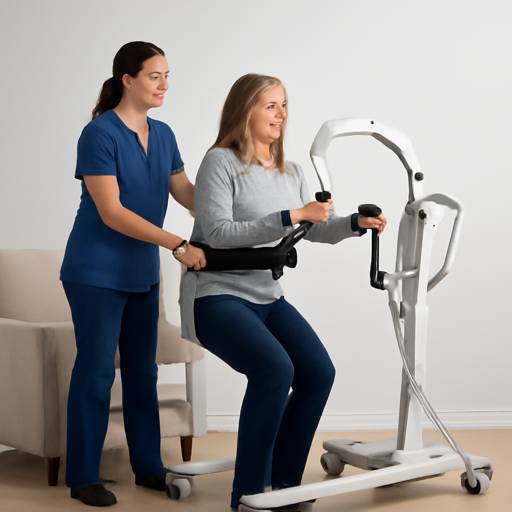
Mobility is more than a physical act; it is a fundamental component of dignity and independence. For individuals recovering from surgery, living with progressive muscle weakness, or managing the natural challenges of aging, the simple act of standing up from a seated position can become a daunting task. Traditional transfer methods—manual lifting or poorly designed slings—often place both the patient and caregiver at significant risk. The electric sit to stand lift has emerged as a sophisticated solution that bridges the gap between total dependency and independent mobility. These devices are engineered not just for lifting, but for facilitating a natural, weight-bearing movement that reinforces the patient’s own strength. The technology behind these lifts is deceptively simple yet profoundly effective: a battery-powered motor drives a hydraulic or linear actuator system, raising the patient from a seated position with a smooth, controlled motion. What sets a quality electric model apart from its manual counterparts is the elimination of uneven cranking or jerky movements, providing a consistent, glide-like ascent that respects the patient’s balance and joint stability. This is particularly critical for individuals with conditions like Parkinson’s disease, hip replacements, or spinal surgeries where sudden jolts can cause severe pain or injury.
The psychosocial impact cannot be overstated. When a person must rely on a transfer board or a full-body sling, they are often reduced to a passive load. The electric sit to stand lift, by contrast, invites active participation. The patient places their feet on a stable platform and leans forward slightly, engaging their core and lower body. The lift then assists in the vertical movement, but the patient maintains a degree of weight-bearing effort. This active engagement preserves muscle tone, encourages circulation, and fosters a sense of agency. Caregivers, too, experience a paradigm shift. Instead of bracing for a heavy, awkward lift that threatens their own back and shoulders, they guide the process with a simple handheld remote or pendant control. The reduction in caregiver strain is measurable, directly lowering the risk of workplace injuries in nursing homes and home care settings. For these reasons, the modern electric sit to stand lift is not merely a piece of equipment—it is a therapeutic tool that upholds the patient’s physical potential while safeguarding the health of those who care for them.
Anatomy of Function: How Electric Power Transforms Sit-to-Stand Mechanics
Understanding the mechanical superiority of an electric model requires a look at its core components and how they interact with the human body. A typical unit consists of a sturdy, wheeled base that slides under a chair or bed, a vertical mast, a knee pad, and a padded sling that wraps around the patient’s back or under the arms. The critical difference lies in the lifting mechanism. Manual lifts rely on a hand crank that requires significant physical exertion to operate, often becoming slower and more uneven as the patient’s weight increases. The electric sit to stand lift employs a sealed, rechargeable battery system and a motor that does the heavy work silently and precisely. This power source allows for a variable speed control, meaning the caregiver can start the lift slowly to ensure the patient’s feet are properly positioned and their balance is secure, then increase speed for the main ascent. Some advanced models even include a safety descent feature, which lowers the patient at a controlled rate in the event of a power failure, preventing the panic and hazard of a sudden drop.
The ergonomic design of the sling and knee pad is another area where electric lifts excel. Because the motor provides consistent force, the sling can be engineered for specific transfer types. For example, a sit-to-stand sling is typically shorter than a full-body sling, designed to support the back and shoulders while leaving the legs free to bear weight. This design encourages the natural standing reflex. The knee pad plays a dual role: it prevents the patient from sliding forward during the lift and provides a stable pivot point. When the lift is activated, the patient’s center of gravity remains aligned over their feet, reducing the fear of falling that often accompanies manual transfers. The base of the lift is equally important. Electric models often feature spreadable legs that are adjusted with a simple foot pedal or an electric actuator, allowing the unit to straddle a wheelchair or bariatric bed. The motorized spread feature, available on higher-end models, eliminates the need for the caregiver to bend down and manually lock the legs, further reducing strain and setup time. These thoughtful integrations of power and ergonomics mean that a single caregiver can independently manage transfers that would otherwise require two or even three people.
When assessing the long-term value of this technology, one must consider the durability of the electric components. Modern units come with high-duty-cycle motors capable of hundreds of lifts per day without overheating. This makes them suitable not only for home use but for high-turnover environments like rehabilitation centers and long-term care facilities. The battery technology has also advanced, with lithium-ion packs offering faster charging times and longer operational life than older sealed lead-acid batteries. A fully charged unit can often perform 30 to 40 full lifts, meaning it can handle a full day of patient care on a single charge. For home users, this translates to fewer interruptions and greater peace of mind. Ultimately, the investment in an electric sit to stand lift is an investment in consistency—the assurance that every transfer will be performed with the same smooth, safe motion, regardless of the caregiver’s physical condition or the time of day.
Clinical Outcomes and the Case for Patient-Powered Mobility
The clinical rationale for prioritizing an electric sit-to-stand approach over a full-body lift or manual techniques is supported by both biomechanical research and real-world care protocols. One of the primary benefits is the preservation of residual ambulation. Patients who are recovering from a stroke or a hip fracture often have the strength to stand but lack the balance or confidence to do so alone. The lift provides a tactile safety net. By bearing partial weight, the patient trains their muscles in a controlled environment, reinforcing the neural pathways required for independent standing. Repeated use of an electric sit to stand lift has been shown to reduce the time required for a patient to transition from needing assistance to standing independently. This is a significant outcome in rehabilitative physiotherapy, where every degree of patient effort counts.
In residential care settings, the adoption of these lifts has led to a measurable decrease in orthostatic hypotension events. Unlike being hoisted from a supine position in a full-body sling, the sit-to-stand method elevates the patient gradually, allowing their cardiovascular system to adjust to the upright position. This slow, motor-assisted rise reduces the sudden drop in blood pressure that can cause dizziness or fainting. Furthermore, the patient’s feet remain in contact with the floor throughout the lift, providing essential proprioceptive feedback. This contact helps the brain maintain spatial awareness and reduces the disorientation that can accompany being lifted into the air. For patients with dementia or cognitive impairment, this grounded approach can significantly lower agitation and resistance during transfers, turning a stressful ordeal into a manageable routine.
From a caregiver perspective, the benefits translate into lower turnover rates and fewer compensation claims. The Occupational Safety and Health Administration (OSHA) has long identified patient handling as a primary cause of workplace injuries in healthcare. An electric sit to stand lift mechanically eliminates the most dangerous aspect of these tasks: the need to support a patient’s full body weight while maneuvering them through space. Because the patient is encouraged to bear weight, the caregiver is primarily responsible for guiding the lift and ensuring environmental safety, not for acting as a human winch. Training for these devices is straightforward, and most caregivers report high satisfaction within the first week of use. The technology addresses the core tension in caregiving: the desire to help without causing harm to oneself. When integrated into a care plan, the lift becomes a silent partner, allowing the caregiver to focus on the patient’s emotional comfort and verbal prompts during the transfer rather than on the physics of the lift itself.
Real-World Applications: Scenarios Where Electric Sit-to-Stand Lifts Excel
To fully appreciate the versatility of this equipment, it helps to examine specific case scenarios where the electric sit to stand lift proves indispensable. Consider the case of a 78-year-old patient recovering from a partial knee replacement. In the first week post-surgery, the patient is strictly non-weight bearing on the surgical leg, yet must be moved from a hospital bed to a chair multiple times a day. A full-body sling would require lifting the leg gently, but it also immobilizes the patient entirely. In this scenario, a sit-to-stand lift allows the patient to use their healthy leg and arms to assist in the transfer. The knee pad supports the surgical leg, keeping it safely extended, while the sling supports the torso. The electric motor provides the precise force needed to bring the patient to a standing position without any torque being applied to the new joint. This method accelerates recovery by preventing deconditioning of the healthy limbs while ensuring the surgical site remains undisturbed. Caregivers report that patients using an electric lift for this purpose are often more willing to get out of bed, as the process feels less invasive and more collaborative.
Another powerful application is in bariatric care. Patients with higher body weights face a systemic challenge in healthcare: traditional lifting equipment often has weight limits that are too low, or the manual effort required to move them is dangerous for staff. High-capacity electric sit to stand lifts are engineered with reinforced frames and powerful motors that can handle weights exceeding 400 or even 600 pounds. In a real-world scenario at a specialized bariatric rehabilitation facility, the introduction of a fleet of electric lifts reduced staff injury rates by 60% within one year. The key was the motor’s ability to handle the load without hesitation. Unlike manual cranks that strained under heavy weight, the electric motor operated with the same smooth efficiency regardless of load. This reliability built trust with both the patients and the caregivers. Patients reported feeling less “handled” and more guided, which improved their willingness to participate in scheduled transfers and, subsequently, their overall mood and cooperation.
Finally, consider the home environment where a single family caregiver is responsible for a parent with advancing multiple sclerosis. The fatigue of manually transferring a loved one four to six times a day is often the breaking point that forces families to consider nursing home placement. An electric sit to stand lift changes this dynamic entirely. The caregiver can position the lift, attach the sling, and simply press a button. The lift does the work, the caregiver provides oversight. This transforms the caregiving experience from a physically exhausting chore into a guided interaction. In one documented case, a family reported that the lift allowed the patient to continue living at home for an additional two years beyond what was medically expected. The battery-powered portability meant the lift could be moved between the bedroom, living room, and bathroom with ease. The patient retained the ability to bear weight, which delayed the loss of muscle mass that typically accelerates with full bed rest. These examples illustrate that the value of an electric sit to stand lift is not confined to clinical efficiency—it is a tool that directly supports human connection, dignity, and the preference for aging in place. When exploring options for such a critical piece of equipment, it is essential to evaluate the range of models and configurations available from a trusted provider. You can review a comprehensive collection of these devices, including an electric sit to stand lift, to understand how different features like battery life, weight capacity, and leg spread mechanisms align with specific care needs. The right choice can transform a daily struggle into a manageable routine, supporting both the patient’s rehabilitation and the caregiver’s long-term well-being.