When mobility becomes a challenge, the simple act of moving from a seated to a standing position transforms from an automatic reflex into a complex, often painful, task. For individuals recovering from surgery, living with chronic weakness, or managing the natural effects of aging, the ability to stand is synonymous with dignity and freedom. The market for patient handling equipment has evolved significantly, and among the most transformative devices available today is the sit-to-stand lift. Unlike a full-body sling lift, this device is designed for patients who possess partial weight-bearing capacity and sufficient upper body strength to grip a handle or support bar. Finding the right sit to stand lift for sale is not merely a procurement decision; it is a commitment to enhancing the quality of life for both the patient and the caregiver. These devices minimize the musculoskeletal injuries that plague healthcare workers while offering patients a more active role in their own transfer. The technology behind these lifts has matured, providing features like battery-powered hydraulic motors, adjustable knee pads, and wide, stable bases that tuck neatly under a bed or chair. This article explores the critical factors that define a superior lift, the real-world impact on care dynamics, and what buyers should prioritize when evaluating options on the market.
Decoding the Mechanics: How a Sit to Stand Lift Redefines Safe Transfers
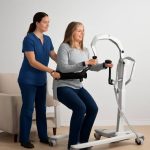
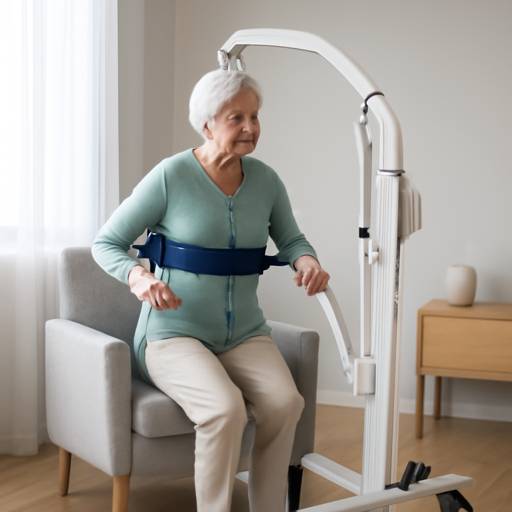
Understanding the operational framework of a sit-to-stand lift is essential for making an informed purchase. These devices operate on a fundamentally different principle compared to a total lift. The mechanics are designed to assist a natural standing motion rather than fully lifting a patient. The patient must be able to bear some weight on their legs and maintain trunk stability. The device features a contoured knee pad that stabilizes the patient’s knees, preventing forward slippage, while a padded back support or sling wraps around the torso. As the lift is actuated—typically via a hand control or a push-button mechanism—the boom arm raises, pulling the patient from a seated to a standing posture. This mimics the biomechanics of a natural stand, engaging core and leg muscles. This active participation is crucial for rehabilitation and helps maintain muscle tone and circulation, reducing the risk of complications like pressure sores and muscle atrophy.
The structural integrity of a lift is non-negotiable. When searching for a sit to stand lift for sale, buyers must examine the steel frame construction, the weight capacity, and the base spread. A heavy-duty base that opens wide provides exceptional stability, which is vital when transferring a patient who may lean or shift unexpectedly. The ergonomic design of the handles is another critical component. Handles should be positioned to allow the patient to pull *down* and *back* during the stand, using their own strength in conjunction with the lift’s power. This reduces the sheer forces on the patient’s shoulders and arms. Furthermore, modern lifts feature intuitive control panels with emergency stop functions and backup manual lowering capabilities. The battery technology has also advanced; high-capacity, sealed lead-acid or lithium-ion batteries now offer enough power for dozens of transfers on a single charge, with intelligent charge indicators preventing downtime. The combination of robust mechanical design and patient-centered ergonomics defines the difference between a marginal piece of equipment and a transformative tool for daily care.
Strategic Selection: Key Features and Compliance When Buying a Lift
Navigating the specifications of a sit-to-stand lift requires a focus on clinical needs and operational longevity. The first consideration is the patient population. For bariatric patients, a heavy-duty model with a capacity of 600 to 1000 pounds is necessary. For standard adult care, a capacity of 400 to 500 pounds is common. However, capacity alone is insufficient. The lift’s *turning radius* and base footprint must align with the care environment. A lift intended for a small home bathroom or a cramped hospital room needs a narrower base for maneuvering, yet must still open wide enough for stability. Look for lifts with a “kick-stand” or a power-open base feature that automatically adjusts the leg width as the lift is raised, ensuring stability without manual adjustment. The material of the sling or back support is equally important. Breathable, washable mesh fabrics reduce perspiration and the risk of skin breakdown, while padded foam slings provide extra comfort for patients with fragile tissue.
Compliance with industry standards is a non-negotiable aspect of any sit to stand lift for sale. Devices should meet or exceed the requirements of ISO 10535 (the international standard for hoists for the transfer of disabled persons) and have CE marking or FDA clearance for the relevant market. These certifications guarantee rigorous testing for stability, load cycling, and electrical safety. Buyers should also verify warranty coverage. A minimum of two years on the mechanical and electrical components, with a lifetime warranty on the frame, is a strong indicator of manufacturer confidence. Furthermore, consider the availability of spare parts and customer service. A lift that breaks down in the middle of a care routine creates significant disruption. Prioritizing vendors who offer robust training materials and responsive technical support ensures that the device remains a reliable asset. By focusing on these technical specifications and compliance markers, caregivers can secure a device that performs safely and consistently over many years of service.
From Theory to Practice: Real-World Applications and Clinical Nuances
The theoretical benefits of a sit-to-stand lift gain true meaning when examined through the lens of daily clinical practice and home care scenarios. Consider the case of a post-operative hip replacement patient. In a traditional setup, a full body lift might be necessary, but a sit-to-stand device, combined with a gait belt and a supportive sling, allows the patient to bear weight progressively. A physical therapist can use the lift to guide the patient through the standing motion, adjusting the height and angle to promote proper joint alignment without exceeding the surgeon’s weight-bearing restrictions. This active assisted transfer is proven to reduce recovery time by encouraging muscle recruitment and improving proprioception. In another application, a patient with progressive multiple sclerosis may use a sit-to-stand lift daily for toileting. The lift’s narrow base slides under the wheelchair, the patient secures the sling, and within thirty seconds, they are upright and pivoting to the toilet. This process eliminates the need for two caregivers to perform a manual pivot transfer, which carries a high risk of injury for both parties.
A particularly insightful case study involves a medium-sized assisted living facility that replaced two manual transfer belts and one full-body lift with three sit-to-stand units. Over six months, the facility reported a 40% reduction in staff back injuries and a marked improvement in patient morale. Residents who previously resisted mobilization due to fear or pain became more willing to engage in the standing process, knowing the lift provided stable support. The facility director noted that the lifts paid for themselves within a year through reduced workers’ compensation claims and reduced staff turnover. Another real-world example comes from home care. A family caring for a parent with Parkinson’s disease found that a sit-to-stand lift allowed them to manage transfers without hiring a home health aide. The father retained a sense of control over his movement, using the lift to stand independently while the family member supervised. This preserved his confidence and delayed the need for more invasive support systems. These examples underscore that the decision to acquire a sit to stand lift for sale is an investment in a proactive care strategy, one that prioritizes active patient participation and caregiver safety over passive lifting. The nuances of application—from the angle of the knee pad to the texture of the sling—make a profound difference in outcomes, highlighting the importance of selecting a model that matches both the physical environment and the specific medical condition of the user.